The Perfect Wind-Down Ritual Is a Myth
A flexible wind-down ritual can make evenings easier to adapt by replacing a rigid checklist with small choices that fit the night you actually have.

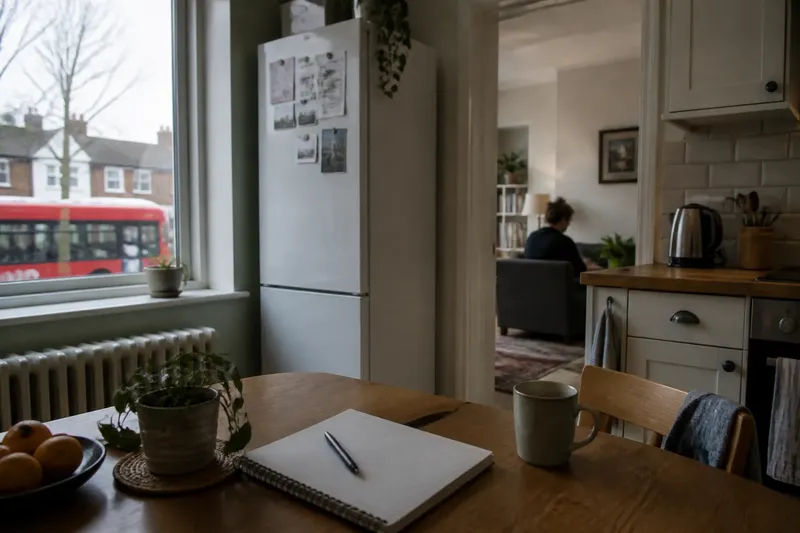
At 8:40, the kettle clicks off while a half-folded load of laundry waits on the sofa. A phone reminder announces the first item in a carefully arranged wind-down ritual: dim the lights. The evening is already asking for something else. The kettle needs pouring, the laundry needs moving, and the reminder has managed to make all three feel like unfinished business.
A wind-down ritual is often described as a dependable sequence: finish one task, perform the next, then arrive at rest. The promise is appealing. But evenings vary, and a sequence designed for an ideal night can become another obligation on an ordinary one. Rest does not require a perfect routine. It needs room to respond to what is happening.
A ritual can become another task list
There is a useful distinction between a cue and a checklist. A cue helps you notice a transition: the kitchen is quiet, a lamp is on, or the day’s work has been put away. A checklist specifies what must happen, and often in what order. A cue can travel between different kinds of evening. A checklist can make any variation feel like a failure.
This is not an argument against regular habits. Repeating a small action can make it easier to stop working or to leave a noisy part of the day behind. The difficulty begins when the action is treated as a condition for rest: no reading until the dishes are done, no settling down until the room is tidy, no pause until every box has been checked.
That logic is familiar from household maintenance. A checklist can be excellent for something that has to be completed in a set order. Rest is less like assembling a shelf and more like setting down a bag: the bag can be put down even if the rest of the room remains imperfect.
One invented evening shows where the sequence breaks
Imagine Mara, who has decided that a good evening requires the same five actions: put away the work laptop, wash the dishes, take a shower, make tea, and read in bed. This is an invented situation, not a report of an actual person. On an unhurried evening, the sequence feels pleasant. The laptop closes, the dishes are handled, and the rest follows without much thought.
Then imagine an evening when Mara finishes work later than expected. A family member has already used the shower, the sink holds a pan that needs soaking, and tea is not appealing. Mara looks at the list and sees several unfinished steps. Instead of choosing a pause that fits, she starts completing the sequence in a hurry. The ritual has changed from a path into a test.
For the next evening, Mara keeps the intention—mark the shift out of work—but stops requiring the same actions. She closes the laptop and asks what would make the next part of the evening easier. If the kitchen is already clear, she may make tea. If she is tired of indoor noise, she may step onto the porch. If she wants to keep reading, she may sit in the living room without first making the bed. The observable result is not a flawless routine; it is a choice that matches the evening, without waiting for every preferred condition.
The lesson is modest. Mara has not discovered a universal method, and one evening cannot establish what will suit someone else. The invented example shows how a fixed sequence can narrow choices, and how a simple intention can leave them open.
A wind-down ritual works better as a small menu
Rather than prescribing an order, it can help to keep a few low-effort options in mind. These are not steps to complete. They are possible responses to different kinds of evenings:
- If your attention is still caught at work: close the laptop, put it out of sight, or write one brief note about where to resume.
- If the room feels busy: clear one small surface or move to a quieter seat, without treating the whole room as a project.
- If your body feels restless: take a short walk through the hallway or stretch in a comfortable way.
- If you want less stimulation: lower the room’s brightness, silence nonessential notifications, or choose a quiet activity.
- If you feel too tired to choose: leave the next decision simple, such as sitting down with a familiar book or taking a few unhurried breaths.
The menu is useful only if it stays small and optional. A list of possible pauses can quietly turn into a new standard: do at least one from each category, preferably in the right order. That is the old checklist wearing softer clothes. The point is not to collect restful actions, but to notice what kind of transition might help now.
Keep the intention, not the exact sequence
A routine is more adaptable when its purpose is clear. “I need to stop working” leaves room for different ways to stop. “I must wash the dishes, shower, make tea, and read” ties that purpose to a narrow route.
To identify the purpose, notice what tends to make an evening feel unfinished. Is work still visible on the table? Are messages pulling attention back toward the day? Is the room too bright for the quiet you want? The answer may point to one useful cue. It need not become a full evening plan.
Some people find it helpful to choose a single anchor that can survive a changing schedule. It might be putting the work device away, changing into comfortable clothes, or moving to a favorite chair. An anchor marks a transition without insisting that every evening unfold in the same way. If it no longer fits, it can be changed; the useful feature is its purpose, not its permanence.
What should a wind-down ritual include?
How many actions should a wind-down ritual have?
There is no required number. A single cue may be enough, while a few optional actions can offer flexibility on evenings with more time and energy.
Should a wind-down ritual happen at the same time every night?
A regular time can suit a predictable schedule, but it is not a condition for rest. If evenings vary, linking a pause to the end of work or another familiar transition may be easier than watching the clock.
What if I miss part of my routine?
Nothing needs to be made up. Choose the next action that would be useful now, or skip the routine and rest in a different way.
Can a fixed routine still be helpful?
Yes, if it feels supportive rather than compulsory. A familiar sequence can be comforting, but it should remain adjustable when the evening, your energy, or your preferences change.
Notice when preparation starts delaying the pause
A useful test is simple: does this action make it easier to settle, or does it postpone settling until more work is done? Washing a cup may remove a small distraction. Washing every dish because relaxation is forbidden until the sink is empty may create a longer task than the pause it was supposed to prepare.
There is no need to judge the answer. Some nights, clearing the kitchen is genuinely satisfying. On another night, leaving the pan to soak and sitting down may be the more reasonable choice. The distinction lies in whether the action serves the moment or the imagined standard for a proper evening.
It can also help to notice the language of an internal rule. Words such as “must,” “always,” and “before I can” can signal that an option has hardened into a requirement. Replacing them with “I could” restores a little room: I could make tea, or I could leave the kitchen and sit down. The alternatives do not need to be equally appealing. They need only be available.
Build a pause around the evening you have
The perfect wind-down ritual is a myth because no single sequence can fit every evening without sometimes becoming work. A flexible wind-down ritual preserves the part that matters—the intention to leave the day’s demands behind—while allowing its form to change.
On one night, that may mean closing a laptop and reading. On another, it may mean letting the laundry wait and sitting in a dim room for a while. If you want to adjust your own wind-down ritual, keep one cue that feels natural and treat everything else as an option. A pause does not need to pass inspection before it counts.