A Pause or a Change of Scene?
A pause or change of scene can mark the boundary between tasks. Learn how to choose the reset that fits your attention, time, and surroundings.
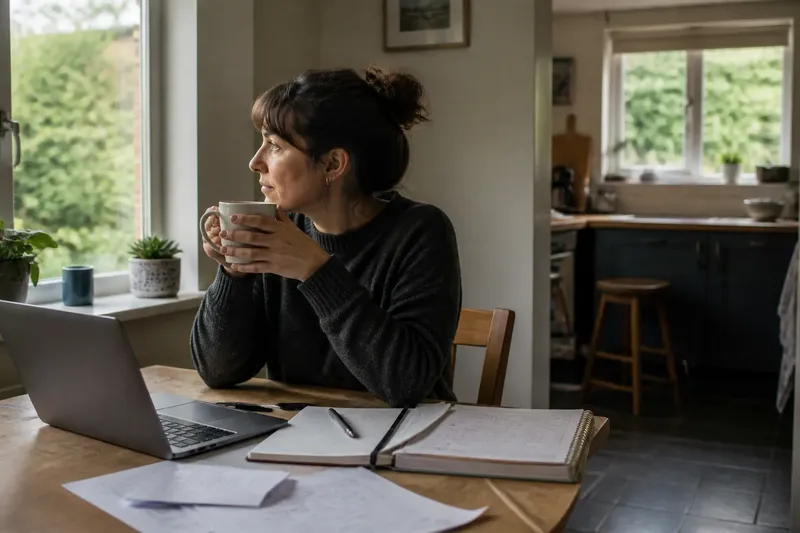
You finish answering messages, close the laptop, and open a document for a different job. The chair is the same, the screen is still glowing, and the last task keeps tugging at your attention. A brief pause or a change of scene can give that handoff a more legible boundary, but the two choices do different work.
A pause keeps you where you are and interrupts the activity. A change of scene moves you somewhere else, even if only to the window or the next room. One alters what you are doing; the other alters what your senses encounter. Choosing between them is less about finding the superior reset than matching the boundary to the transition you need.
A pause stops the task without changing its setting
Staying put can be useful when the next task belongs in the same workspace and you do not need much separation. You might set down the mouse, let your hands rest, and look away from the screen for a moment. The desk remains familiar, but the immediate stream of actions has stopped.
That small interruption can make a transition visible. Before the pause, you were responding to a particular prompt or trying to finish a sentence. After it, you can choose what to do next instead of sliding into the next job by reflex. The distinction is subtle, rather like placing a bookmark in a book rather than moving to another room: the place stays the same, but the activity has a clear break.
A pause is not automatically restorative. If you sit still while replaying the previous task, the body has stopped but attention may still be occupied. A simple sensory anchor can help make the interruption more concrete: notice the weight of your feet on the floor, take a drink of water, or let your eyes rest on a distant object. These are options, not requirements; the point is to stop feeding the old task for a short while.
A change of scene gives the transition a different cue
Moving to another spot changes more than your posture. A different chair, a view of the street, or the quieter end of a hallway can provide fresh sensory information. That change may help when the previous task has left a strong residue, or when the next one calls for a different mode of attention.
The destination need not be special. The kitchen counter might suit a quick planning note; a window might give your eyes a break from close work. What matters is that the new spot is appropriate for what comes next and does not create a new distraction that takes longer to resolve than the task itself.
Movement also has a cost. You have to leave what you were doing, travel, and then settle again. If the next task is brief or the available space is crowded, relocation may become a small production. A change of scene is most useful when the new setting contributes something the current one cannot easily provide, such as less visual clutter or a clearer separation from the tools of the previous task.
Choose the boundary that matches the transition
Start by asking what is making the handoff difficult. If you are carrying momentum from a demanding task, a pause may be enough to stop its immediate rhythm. If the room itself keeps pulling you back toward the old task, changing spots may provide a stronger cue. If you are simply short on time, staying put may be the more sensible choice.
- Stay in place when the next task uses the same setup and a brief interruption is enough.
- Move nearby when a modest change in view or posture would help distinguish the next activity.
- Use a pause before moving when you need to close out the current task before choosing where to go.
- Skip an elaborate reset when the transition is already clear and extra steps would become another task.
Imagine you have finished drafting a note at your kitchen table and need to review a household schedule. If the draft is still open and inviting edits, you might close it, rest your hands briefly, then turn to the schedule at the same table. If the table is covered with draft materials, you might take the schedule to a nearby counter instead. In either case, the observable difference is a clearer start: the note is no longer the active focus, and the schedule is in front of you.
Small details determine whether a reset feels clear
The boundary works best when it is easy to recognize. A pause can have a simple beginning and end: put down the tool, notice one sensation, then name the next task. A move can use a clear destination: leave the desk and sit in a particular chair to read. Neither needs a timer, a formal routine, or a special object. If the transition is already obvious, adding ceremony is unlikely to improve it.
Keep the reset proportionate. After a short, routine task, a long break may interrupt more than it helps. After a tense or absorbing task, a longer pause or a different spot may feel more fitting. The useful measure is not how restful the action looks from the outside, but whether it helps you release the previous task enough to begin the next one.
There is also no need to force a clean mental slate. Tasks overlap, and a thought from the previous one may remain while you begin another. The aim is a workable boundary, not proof that you have stopped thinking about what came before. You can note an unfinished item on paper before pausing, so the reminder does not have to stay active in your head.
Questions about pauses and changing scenes?
How long should a pause between tasks be?
Long enough to interrupt the previous activity and choose what comes next, but not necessarily long enough to feel like a break in its own right. Let the task and your attention determine the duration rather than adopting a fixed rule.
Is walking to another room better than staying at my desk?
Neither is inherently better. Moving can offer a distinct sensory cue, while staying saves effort and keeps the next task close at hand.
What if I cannot leave my workspace?
Change one small part of the scene without relocating: turn away from the screen, put away the tool you just used, or shift to a different surface if one is available. A pause in place can still mark a boundary.
Can I combine a pause with a change of scene?
Yes, if the combination suits the handoff rather than becoming a routine you have to complete. You might stop, close the current file, and then walk to a quieter seat for the next task.
Let the next task decide how much separation you need
A pause or change of scene is a small choice about how to mark the space between activities. Staying put interrupts the stream while preserving the setting; moving changes the sensory cues as well. The right option depends on what is keeping the old task present, what the next task requires, and how much effort the transition can reasonably take.
For an ordinary handoff, try the simplest boundary that seems sufficient. If the old task keeps reclaiming your attention, adjust the cue: make the pause more deliberate or move to a more suitable spot. Treat the choice as information about your surroundings and attention, not a test of discipline. A clear enough beginning is often all the next task needs.