A Rainy Afternoon, Planned Around One Quiet Cue
A rainy afternoon routine built around warm light offers one steady sensory cue, gentle transitions, and open time without turning the day into a schedule.
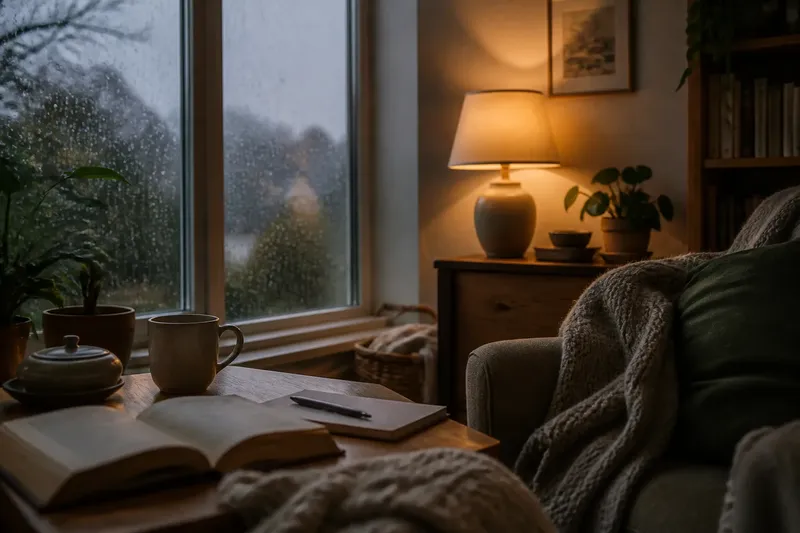
The rain darkens the kitchen window while a mug cools beside the sink. A rainy afternoon can feel oddly shapeless: the plans outside have gone, but the hours remain. Choose one quiet sensory cue—perhaps the warm light of a table lamp—and let it mark a few transitions without dictating what happens between them.
This is a loose routine, not a timetable. The lamp is an anchor, like a bookmark holding a place without telling you how quickly to read. Leave the rest of the afternoon available for reading, making something, doing a small chore, or doing very little. The point is to notice a change in the day without filling every pause.
Choose a cue that can stay simple
Pick one cue that is easy to notice and easy to keep consistent. Warm light works well because a lamp can remain on through different activities, but the cue might instead be the sound of rain against a sill, the feel of a knitted throw, or the smell of tea steeping. Choose one, rather than assembling a sensory arrangement with the solemnity of a stage set.
For this plan, use a lamp in a room where you are comfortable spending time. Place it where its light is visible from your usual chair, but not shining directly into your eyes. The cue is not a signal that you must relax, feel grateful, or suddenly become a person who enjoys a rainy day. It is simply something you can return your attention to.
Keep the cue available through the afternoon. If you move to another room, you do not need to carry the lamp with you; the routine can pause there. If the rain sound is your chosen cue, it may fade or stop. That is ordinary, not a failure of the plan. Notice the change and carry on with the next part of the afternoon if it still suits you.
Begin by arriving, not catching up
When you first come in from an errand or finish a work task, give yourself a small landing. Set down your bag, remove a wet coat, and put anything that needs drying where it belongs. Switch on the lamp. Take a moment to notice its warm patch on the wall or tabletop before deciding what comes next.
This arrival is deliberately modest. Do not use it to review every unfinished task or to decide that the day needs rescuing. If a practical matter is pressing, write it on a scrap of paper and set the paper aside. The list can keep the thought from circling without making it the afternoon’s entire subject.
Say you come home damp from a short walk and feel pulled toward both the laundry basket and your phone. You switch on the lamp, hang the coat to dry, and put the phone on a shelf while you make tea. The observable result is not a transformed mood: you have completed the immediate arrival tasks and made it easier to choose what to do next.
Let the next hour remain open
Once you have arrived, choose one activity by asking what feels suitable now, rather than what would make the afternoon look well used. A paperback, a puzzle, mending a loose button, or a simple meal can all fit. You can also sit without taking on an activity. Leave enough room for changing your mind.
Keep the lamp in view and use it as a gentle point of return. If you notice yourself drifting into a string of unrelated tasks, glance toward the light and ask whether you want to continue, switch, or stop. This is not a command to settle down. It is a way to make the next choice visible.
Some people find it helpful to leave one surface clear: a corner of the table for a book, a cup, or a sheet of paper. That small patch can make choosing less fussy. Avoid turning the room into a collection of cues. A candle, playlist, special drink, and carefully arranged blanket may all be pleasant, but they are not needed for this plan.
Use a few natural transitions
A rainy afternoon often contains small shifts: a drink runs out, daylight dims, hunger arrives, or an activity stops holding your attention. Let one of these ordinary events be the point at which you check in with the lamp and choose what follows. There is no need to make each transition ceremonial.
- When the first activity ends: Look toward the lamp, put away only what is in your way, and choose whether to continue, change activities, or take an unstructured pause.
- When you want something warm: Make tea, cocoa, or another drink you already enjoy. Let preparing it be the transition; you do not need to add a new rule about how to drink it.
- When the room grows dim: Notice whether the lamp still feels comfortable. Adjust the room’s lighting to suit your eyes and the task rather than preserving the cue at all costs.
- When you feel restless: Stand, stretch, look out the window, or move to another room. The cue can remain behind; returning to it is optional.
- When a necessary chore appears: Decide whether it is genuinely time-sensitive. If it is, do it; if not, note it for later and return to the afternoon you meant to have.
These are options, not stages to complete. If you spend the whole afternoon absorbed in one book, the transitions may barely arise. If you have family, housemates, or care responsibilities, the plan can bend around them; a cue is useful only if it fits the room and the people who share it.
Keep open time from becoming another assignment
Open time can be harder to inhabit than a planned activity. Without a task to follow, some people start looking for the most respectable use of the hour. Resist the urge to appoint the afternoon as a test of your ability to rest. You may read, nap, draw, sort a drawer, or change your mind halfway through. The routine does not grade the choice.
If you reach for your phone automatically, notice what prompted the movement. Perhaps you were bored, waiting for the kettle, or unsure what to do. You can still pick it up. You might also leave it where it is and look at the lamp or the rain for a moment first. That brief notice makes the choice more deliberate without turning screen use into a moral issue.
When the cue stops feeling pleasant, let it go. Move the lamp, switch it off, or leave the room. A routine based on sensory attention should make room for sensory preference; it should not insist that one kind of light or sound is calming for everyone. If warm light feels dull or uncomfortable, a different cue may suit you better on another rainy day.
Questions that help the plan stay flexible?
What if I do not feel calmer?
Nothing needs to change. The lamp is an attention cue, not a promise of a particular mood. You can keep it on, choose another activity, or end the routine when it no longer serves you.
Can I use a sound instead of light?
Yes. Rain at the window, a quiet kettle, or a familiar instrumental track can work if you can notice it without having to manage it constantly. Choose one cue and let it support a transition rather than becoming the afternoon’s main event.
What if I have errands or chores to do?
Do what cannot reasonably wait, then return to open time if you can. The routine is meant to sit alongside ordinary responsibilities, not pretend they disappear when the weather turns.
Should I follow the same plan every rainy day?
No. Reuse only the parts that feel useful: the lamp, the arrival pause, or the permission to leave a stretch unplanned. A routine can be familiar without being compulsory.
End the afternoon with a small handoff
When you are ready to move into dinner, an evening obligation, or another part of the day, make one simple handoff. Put away the mug, close the book, or switch off the lamp. If a task still needs attention, write down its next concrete action rather than carrying a vague reminder around in your head.
You do not need to judge whether the afternoon was restorative. Notice only what helped you move through it: perhaps the light made a transition easier to see, or perhaps the open stretch was enough. On another rainy afternoon, the same cue may suit you—or not. Keep the useful part, and let the rest stay as changeable as the weather.